When Medical Gaslighting Becomes Self‑Gaslighting

For many people living with chronic illness, chronic pain, disability, or medically unexplained symptoms, the most painful part isn’t always the illness itself — it’s the way they’ve been treated while trying to get help. Medical gaslighting doesn’t just leave you unheard in the exam room. Over time, it can change the way you talk to yourself, trust your body, and make sense of your symptoms. This is the part no one warns you about: external gaslighting eventually becomes internal gaslighting. And it happens slowly, quietly, and often without you realizing it.
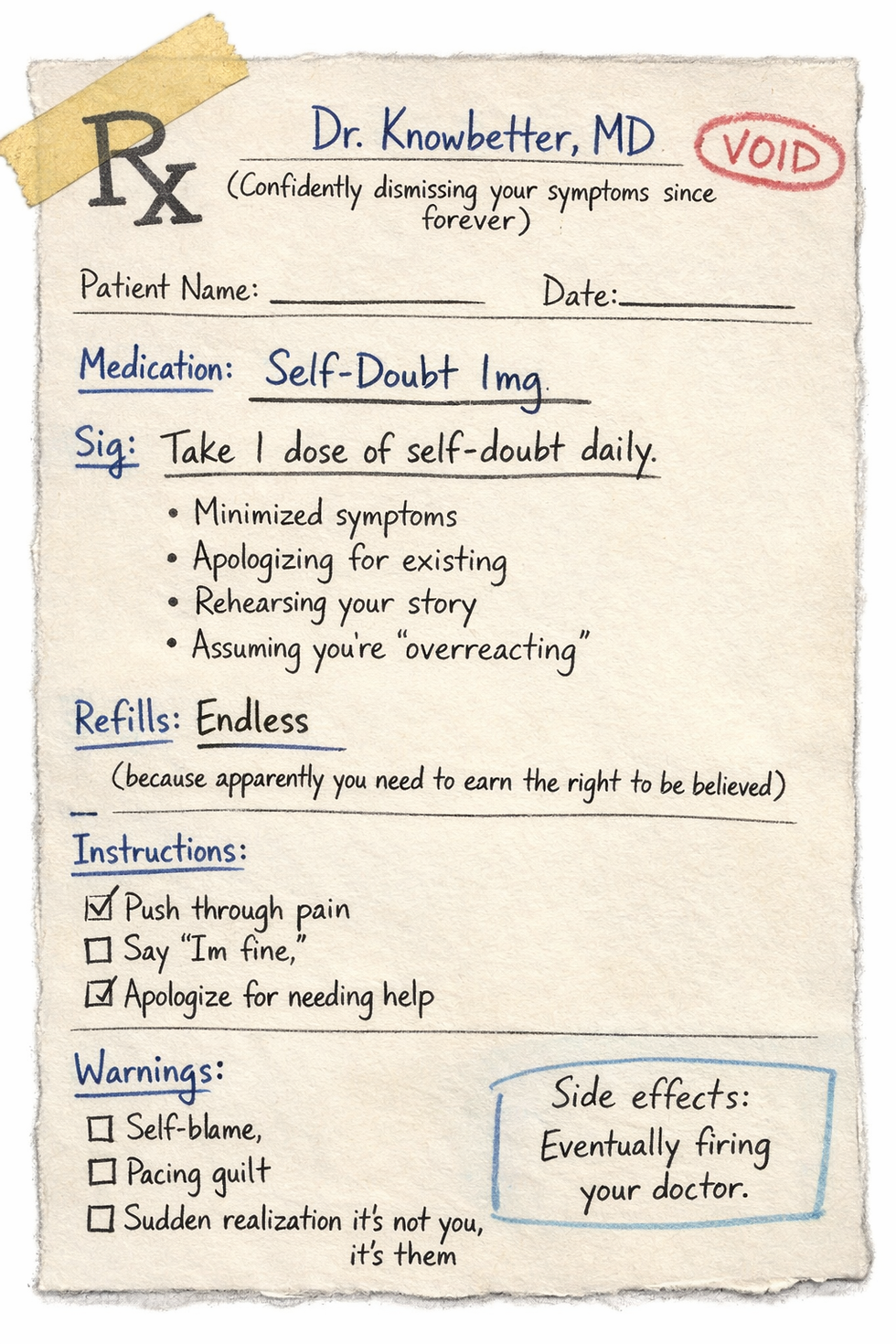
The moment it starts: “Maybe I’m overreacting.”
Most people don’t begin their medical journey doubting themselves. They start by doing exactly what they’re supposed to do: noticing symptoms, seeking care, asking questions.
But after enough appointments where you’re told:
“Your labs are normal.”
“You’re just stressed.”
“You’re too young for anything serious.”
“It’s probably anxiety.”
“You’re reading too much online.”
…something shifts.
You start wondering if you’re the problem. You start rehearsing your symptoms before appointments, trying to sound “reasonable.” You start minimizing what you feel so you won’t be dismissed again. This is the beginning of self‑gaslighting.
How self‑gaslighting shows up
Self‑gaslighting is subtle. It sounds like:
“It’s probably nothing.”
“Other people have it worse.”
“I’m being dramatic.”
“Maybe I imagined it.”
“I should push through.”
“I don’t want to bother anyone.”
“If it were real, someone would have found it by now.”
You start invalidating yourself before anyone else can. It becomes a protective strategy — a way to avoid the pain of being dismissed again. But it also disconnects you from your own body and needs.
Why this happens: the psychology behind it
Medical gaslighting is not just frustrating — it’s traumatic. When you repeatedly seek help and are met with disbelief, your nervous system learns that speaking up is unsafe.
So you adapt. You shrink your symptoms. You hide your pain. You apologize for needing care. You push through crashes, flares, and exhaustion. You try to be the “easy patient.”
This is not weakness. This is survival. Your brain is trying to protect you from further harm by pre‑rejecting your own experience.
The role of internalized ableism
Many people with chronic illness absorb messages like:
“Rest is laziness.”
“Needing help is weakness.”
“If you can’t keep up, you’re failing.”
These beliefs make self‑gaslighting even stronger. You start believing you should be able to push through, that your body is betraying you, or that you’re somehow at fault for being sick.
Internalized ableism makes you question your own limits instead of honoring them.
Why some illnesses are gaslit more than others
People with conditions like ME/CFS, Long COVID, fibromyalgia, dysautonomia, migraine, endometriosis, or functional neurological symptoms are far more likely to be dismissed because:
symptoms are invisible
tests don’t always show the full picture
symptoms fluctuate
the medical system is biased toward conditions with clear biomarkers
Meanwhile, illnesses like cancer or diabetes are rarely questioned because they fit the medical system’s expectations. This difference in treatment is real — and it shapes how people learn to trust (or distrust) their own bodies.
The emotional toll
Self‑gaslighting creates:
chronic self‑doubt
shame
fear of being “too much”
guilt for resting
anxiety about seeking care
grief for the parts of life you’ve lost
isolation, because you don’t want to burden anyone
It becomes harder to know what’s “real,” what’s “serious,” and what deserves attention.
And the truth is: all of it deserves attention.
Relearning how to trust your body
Healing from self‑gaslighting is not about becoming “confident” overnight. It’s about slowly rebuilding a relationship with your body that feels safe, compassionate, and grounded.
This often looks like:
noticing symptoms without minimizing them
validating your own experience
pacing without guilt
honoring limits without apology
seeking care without rehearsing your worthiness
letting yourself rest without justification
It’s a process — and you don’t have to do it alone.
How therapy can help
Therapy for chronic illness and medical trauma isn’t about convincing you that “it’s all in your head.” It’s about helping you:
understand how gaslighting shaped your beliefs
reconnect with your body’s signals
reduce shame and self‑blame
regulate your nervous system
feel safer advocating for yourself
rebuild trust in your own experience
You deserve care that believes you, supports you, and honors the reality of what you live with every day.
You are not imagining this. You are not exaggerating. You are not the problem.
If you’ve been dismissed, minimized, or blamed for your symptoms, the impact is real — and so is your experience. You deserve to be heard. You deserve to be taken seriously. You deserve support that understands the emotional and physical toll of chronic illness. If you’d like to explore this in therapy, I offer support for adults in Connecticut living with chronic illness, chronic pain, disability, and medical trauma. You’re welcome to reaFor many people living with chronic illness, chronic pain, disability, or medically unexplained symptoms, the most painful part isn’t always the illness itself — it’s the way they’ve been treated while trying to get help. Medical gaslighting doesn’t just leave you unheard in the exam room. Over time, it can change the way you talk to yourself, trust your body, and make sense of your symptoms. This is the part no one warns you about: external gaslighting eventually becomes internal gaslighting. And it happens slowly, quietly, and often without you realizing it.
The moment it starts: “Maybe I’m overreacting.”
Most people don’t begin their medical journey doubting themselves. They start by doing exactly what they’re supposed to do: noticing symptoms, seeking care, asking questions.
But after enough appointments where you’re told:
“Your labs are normal.”
“You’re just stressed.”
“You’re too young for anything serious.”
“It’s probably anxiety.”
“You’re reading too much online.”
…something shifts.
You start wondering if you’re the problem. You start rehearsing your symptoms before appointments, trying to sound “reasonable.” You start minimizing what you feel so you won’t be dismissed again. This is the beginning of self‑gaslighting.
How self‑gaslighting shows up
Self‑gaslighting is subtle. It sounds like:
“It’s probably nothing.”
“Other people have it worse.”
“I’m being dramatic.”
“Maybe I imagined it.”
“I should push through.”
“I don’t want to bother anyone.”
“If it were real, someone would have found it by now.”
You start invalidating yourself before anyone else can. It becomes a protective strategy — a way to avoid the pain of being dismissed again. But it also disconnects you from your own body and needs.
Why this happens: the psychology behind it
Medical gaslighting is not just frustrating — it’s traumatic. When you repeatedly seek help and are met with disbelief, your nervous system learns that speaking up is unsafe.
So you adapt. You shrink your symptoms. You hide your pain. You apologize for needing care. You push through crashes, flares, and exhaustion. You try to be the “easy patient.”
This is not weakness. This is survival. Your brain is trying to protect you from further harm by pre‑rejecting your own experience.
The role of internalized ableism
Many people with chronic illness absorb messages like:
“Rest is laziness.”
“Needing help is weakness.”
“If you can’t keep up, you’re failing.”
These beliefs make self‑gaslighting even stronger. You start believing you should be able to push through, that your body is betraying you, or that you’re somehow at fault for being sick.
Internalized ableism makes you question your own limits instead of honoring them.
Why some illnesses are gaslit more than others
People with conditions like ME/CFS, Long COVID, fibromyalgia, dysautonomia, migraine, endometriosis, or functional neurological symptoms are far more likely to be dismissed because:
symptoms are invisible
tests don’t always show the full picture
symptoms fluctuate
the medical system is biased toward conditions with clear biomarkers
Meanwhile, illnesses like cancer or diabetes are rarely questioned because they fit the medical system’s expectations. This difference in treatment is real — and it shapes how people learn to trust (or distrust) their own bodies.
The emotional toll
Self‑gaslighting creates:
chronic self‑doubt
shame
fear of being “too much”
guilt for resting
anxiety about seeking care
grief for the parts of life you’ve lost
isolation, because you don’t want to burden anyone
It becomes harder to know what’s “real,” what’s “serious,” and what deserves attention.
And the truth is: all of it deserves attention.
Relearning how to trust your body
Healing from self‑gaslighting is not about becoming “confident” overnight. It’s about slowly rebuilding a relationship with your body that feels safe, compassionate, and grounded.
This often looks like:
noticing symptoms without minimizing them
validating your own experience
pacing without guilt
honoring limits without apology
seeking care without rehearsing your worthiness
letting yourself rest without justification
It’s a process — and you don’t have to do it alone.
How therapy can help
Therapy for chronic illness and medical trauma isn’t about convincing you that “it’s all in your head.” It’s about helping you:
understand how gaslighting shaped your beliefs
reconnect with your body’s signals
reduce shame and self‑blame
regulate your nervous system
feel safer advocating for yourself
rebuild trust in your own experience
You deserve care that believes you, supports you, and honors the reality of what you live with every day.
You are not imagining this. You are not exaggerating. You are not the problem.
If you’ve been dismissed, minimized, or blamed for your symptoms, the impact is real — and so is your experience. You deserve to be heard. You deserve to be taken seriously. You deserve support that understands the emotional and physical toll of chronic illness. If you’d like to explore this in therapy, I offer support for adults in Connecticut living with chronic illness, chronic pain, disability, and medical trauma. You’re welcome to reach out for a free 15‑minute consultation if it feels right for you. You don’t have to navigate this alone. ch out for a free 15‑minute consultation if it feels right for you. You don’t have to navFor many people living with chronic illness, chronic pain, disability, or medically unexplained symptoms, the most painful part isn’t always the illness itself — it’s the way they’ve been treated while trying to get help. Medical gaslighting doesn’t just leave you unheard in the exam room. Over time, it can change the way you talk to yourself, trust your body, and make sense of your symptoms. This is the part no one warns you about: external gaslighting eventually becomes internal gaslighting. And it happens slowly, quietly, and often without you realizing it.
The moment it starts: “Maybe I’m overreacting.”
Most people don’t begin their medical journey doubting themselves. They start by doing exactly what they’re supposed to do: noticing symptoms, seeking care, asking questions.
But after enough appointments where you’re told:
“Your labs are normal.”
“You’re just stressed.”
“You’re too young for anything serious.”
“It’s probably anxiety.”
“You’re reading too much online.”
…something shifts.
You start wondering if you’re the problem. You start rehearsing your symptoms before appointments, trying to sound “reasonable.” You start minimizing what you feel so you won’t be dismissed again. This is the beginning of self‑gaslighting.
How self‑gaslighting shows up
Self‑gaslighting is subtle. It sounds like:
“It’s probably nothing.”
“Other people have it worse.”
“I’m being dramatic.”
“Maybe I imagined it.”
“I should push through.”
“I don’t want to bother anyone.”
“If it were real, someone would have found it by now.”
You start invalidating yourself before anyone else can. It becomes a protective strategy — a way to avoid the pain of being dismissed again. But it also disconnects you from your own body and needs.
Why this happens: the psychology behind it
Medical gaslighting is not just frustrating — it’s traumatic. When you repeatedly seek help and are met with disbelief, your nervous system learns that speaking up is unsafe.
So you adapt. You shrink your symptoms. You hide your pain. You apologize for needing care. You push through crashes, flares, and exhaustion. You try to be the “easy patient.”
This is not weakness. This is survival. Your brain is trying to protect you from further harm by pre‑rejecting your own experience.
The role of internalized ableism
Many people with chronic illness absorb messages like:
“Rest is laziness.”
“Needing help is weakness.”
“If you can’t keep up, you’re failing.”
These beliefs make self‑gaslighting even stronger. You start believing you should be able to push through, that your body is betraying you, or that you’re somehow at fault for being sick.
Internalized ableism makes you question your own limits instead of honoring them.
Why some illnesses are gaslit more than others
People with conditions like ME/CFS, Long COVID, fibromyalgia, dysautonomia, migraine, endometriosis, or functional neurological symptoms are far more likely to be dismissed because:
symptoms are invisible
tests don’t always show the full picture
symptoms fluctuate
the medical system is biased toward conditions with clear biomarkers
Meanwhile, illnesses like cancer or diabetes are rarely questioned because they fit the medical system’s expectations. This difference in treatment is real — and it shapes how people learn to trust (or distrust) their own bodies.
The emotional toll
Self‑gaslighting creates:
chronic self‑doubt
shame
fear of being “too much”
guilt for resting
anxiety about seeking care
grief for the parts of life you’ve lost
isolation, because you don’t want to burden anyone
It becomes harder to know what’s “real,” what’s “serious,” and what deserves attention.
And the truth is: all of it deserves attention.
Relearning how to trust your body
Healing from self‑gaslighting is not about becoming “confident” overnight. It’s about slowly rebuilding a relationship with your body that feels safe, compassionate, and grounded.
This often looks like:
noticing symptoms without minimizing them
validating your own experience
pacing without guilt
honoring limits without apology
seeking care without rehearsing your worthiness
letting yourself rest without justification
It’s a process — and you don’t have to do it alone.
How therapy can help
Therapy for chronic illness and medical trauma isn’t about convincing you that “it’s all in your head.” It’s about helping you:
understand how gaslighting shaped your beliefs
reconnect with your body’s signals
reduce shame and self‑blame
regulate your nervous system
feel safer advocating for yourself
rebuild trust in your own experience
You deserve care that believes you, supports you, and honors the reality of what you live with every day.
You are not imagining this. You are not exaggerating. You are not the problem.
If you’ve been dismissed, minimized, or blamed for your symptoms, the impact is real — and so is your experience. You deserve to be heard. You deserve to be taken seriously. You deserve support that understands the emotional and physical toll of chronic illness. If you’d like to explore this in therapy, I offer support for adults in Connecticut living with chronic illness, chronic pain, disability, and medical trauma. You’re welcome to reaFor many people living with chronic illness, chronic pain, disability, or medically unexplained symptoms, the most painful part isn’t always the illness itself — it’s the way they’ve been treated while trying to get help. Medical gaslighting doesn’t just leave you unheard in the exam room. Over time, it can change the way you talk to yourself, trust your body, and make sense of your symptoms. This is the part no one warns you about: external gaslighting eventually becomes internal gaslighting. And it happens slowly, quietly, and often without you realizing it.
The moment it starts: “Maybe I’m overreacting.”
Most people don’t begin their medical journey doubting themselves. They start by doing exactly what they’re supposed to do: noticing symptoms, seeking care, asking questions.
But after enough appointments where you’re told:
“Your labs are normal.”
“You’re just stressed.”
“You’re too young for anything serious.”
“It’s probably anxiety.”
“You’re reading too much online.”
…something shifts.
You start wondering if you’re the problem. You start rehearsing your symptoms before appointments, trying to sound “reasonable.” You start minimizing what you feel so you won’t be dismissed again. This is the beginning of self‑gaslighting.
How self‑gaslighting shows up
Self‑gaslighting is subtle. It sounds like:
“It’s probably nothing.”
“Other people have it worse.”
“I’m being dramatic.”
“Maybe I imagined it.”
“I should push through.”
“I don’t want to bother anyone.”
“If it were real, someone would have found it by now.”
You start invalidating yourself before anyone else can. It becomes a protective strategy — a way to avoid the pain of being dismissed again. But it also disconnects you from your own body and needs.
Why this happens: the psychology behind it
Medical gaslighting is not just frustrating — it’s traumatic. When you repeatedly seek help and are met with disbelief, your nervous system learns that speaking up is unsafe.
So you adapt. You shrink your symptoms. You hide your pain. You apologize for needing care. You push through crashes, flares, and exhaustion. You try to be the “easy patient.”
This is not weakness. This is survival. Your brain is trying to protect you from further harm by pre‑rejecting your own experience.
The role of internalized ableism
Many people with chronic illness absorb messages like:
“Rest is laziness.”
“Needing help is weakness.”
“If you can’t keep up, you’re failing.”
These beliefs make self‑gaslighting even stronger. You start believing you should be able to push through, that your body is betraying you, or that you’re somehow at fault for being sick.
Internalized ableism makes you question your own limits instead of honoring them.
Why some illnesses are gaslit more than others
People with conditions like ME/CFS, Long COVID, fibromyalgia, dysautonomia, migraine, endometriosis, or functional neurological symptoms are far more likely to be dismissed because:
symptoms are invisible
tests don’t always show the full picture
symptoms fluctuate
the medical system is biased toward conditions with clear biomarkers
Meanwhile, illnesses like cancer or diabetes are rarely questioned because they fit the medical system’s expectations. This difference in treatment is real — and it shapes how people learn to trust (or distrust) their own bodies.
The emotional toll
Self‑gaslighting creates:
chronic self‑doubt
shame
fear of being “too much”
guilt for resting
anxiety about seeking care
grief for the parts of life you’ve lost
isolation, because you don’t want to burden anyone
It becomes harder to know what’s “real,” what’s “serious,” and what deserves attention.
And the truth is: all of it deserves attention.
Relearning how to trust your body
Healing from self‑gaslighting is not about becoming “confident” overnight. It’s about slowly rebuilding a relationship with your body that feels safe, compassionate, and grounded.
This often looks like:
noticing symptoms without minimizing them
validating your own experience
pacing without guilt
honoring limits without apology
seeking care without rehearsing your worthiness
letting yourself rest without justification
It’s a process — and you don’t have to do it alone.
How therapy can help
Therapy for chronic illness and medical trauma isn’t about convincing you that “it’s all in your head.” It’s about helping you:
understand how gaslighting shaped your beliefs
reconnect with your body’s signals
reduce shame and self‑blame
regulate your nervous system
feel safer advocating for yourself
rebuild trust in your own experience
You deserve care that believes you, supports you, and honors the reality of what you live with every day.
You are not imagining this. You are not exaggerating. You are not the problem.
If you’ve been dismissed, minimized, or blamed for your symptoms, the impact is real — and so is your experience. You deserve to be heard. You deserve to be taken seriously. You deserve support that understands the emotional and physical toll of chronic illness. If you’d like to explore this in therapy, I offer support for adults in Connecticut living with chronic illness, chronic pain, disability, and medical trauma. You’re welcome to reach out for a free 15‑minute consultation if it feels right for you. You don’t have to navigate this alone. ch out for a free 15‑minute consultation if it feels right for you. You don’t have to navigate this alone. igate this alone.


Comments